Between Draft and Delivery: Making Internal Peer Review Worth the Calendar Space

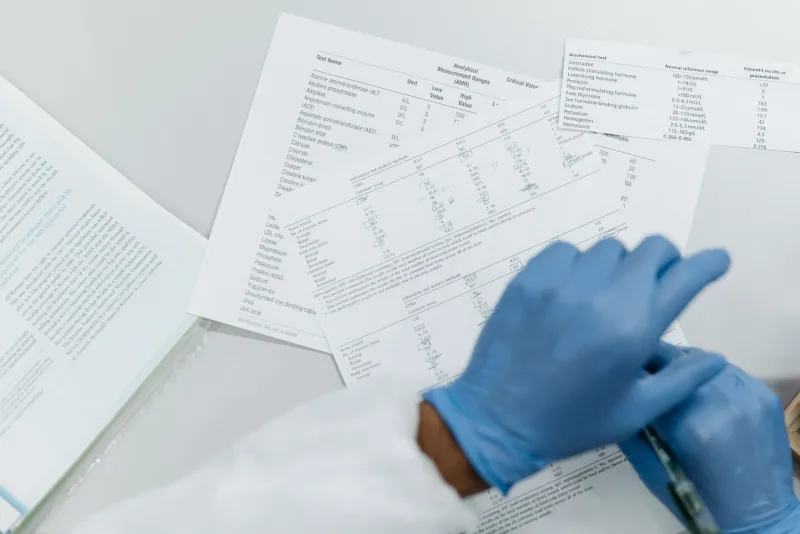
Photo: Unknown authorUnknown author, Public domain, via Wikimedia Commons
Peer review in UK medical communications is often treated as an extension of quality control: another pair of eyes before the formal approval chain begins. That framing undersells it. A well-designed peer review tests whether the work communicates clearly to its intended audience, whether the evidence carries the claims being made, and whether the team has thought through the practical consequences of the draft. Done badly, it becomes a seniority contest or a second rewrite. Done well, it is one of the clearest signals of a healthy editorial culture.
Begin with a decision, not a meeting
The most common failure is convening a review without stating what the reviewer is being asked to decide. “Any comments?” invites scattered preferences. A useful review brief names the stage of the document, the audience, the channel, the client’s constraints and two or three specific questions. For example: “Does the opening frame the patient pathway accurately, and is the claim on page two supported by the cited study?” That is a different task from copy-editing, and different again from compliance review.
Scope also means knowing what is out of bounds. If the approved claims set is fixed, say so. If the visual design is still in development, separate the editorial review from the design critique. Peer review should not quietly absorb every unresolved decision in the project. Its value lies in focused judgement at the right moment.
Match the reader to the problem
Reviewers should be chosen for the question in front of the team, not for their place in the hierarchy. An early draft may need someone with therapeutic or audience knowledge who can spot a misleading emphasis. A near-final draft may need a colleague from outside the account who can read it as a busy healthcare professional would. A patient-facing piece may need plain-English scrutiny from someone who did not write the original brief.
That requires discipline. The most senior person in the room is not automatically the best reviewer for every task. Rotating reviewers builds capacity and gives more junior colleagues a legitimate way to develop critical reading. It also makes peer review a career skill rather than a compliance ritual: learning to give evidence-based critique, to receive it without defensiveness and to distinguish a genuine risk from a matter of taste.
Timebox the critique
Open-ended review expands to fill the time available. Set a reading period, a discussion slot and a response deadline. Ask reviewers to group comments as must change, should consider or note for a future version. A short template helps, as does a shared document with comment categories rather than an unstructured stream of edits.
In the meeting, protect the author’s thinking time. The reviewer should explain the issue and the evidence behind it; the author should be able to question and respond. Avoid turning the session into line editing. If the discussion drifts into wording preferences, the chair should bring it back to the review questions. For asynchronous review, state the format expected and the date by which comments will be considered. A review without a boundary is simply another source of delay.
Challenge with evidence, not hierarchy
Medical communications depends on defensible claims. Reviewers should ask where a statement comes from, whether the cited study supports the specific population or endpoint, and whether the wording implies more certainty than the data allow. They should also test practical compliance questions, including whether the draft is consistent with the ABPI Code and the client’s approved materials. But citing the Code should open a discussion, not close it.
The chair has a particular responsibility here. Preference and requirement are not the same thing. A reviewer may dislike a phrase; that is not the same as showing that it misleads. When disagreement persists, record the competing rationales and escalate with evidence rather than seniority. That habit improves the work and protects the team from decisions that cannot be explained later.
Capture decisions before version control drifts
A review that is not recorded will be relitigated. Keep a short decision log alongside the document: what was agreed, who owns the action, the reason and the date. Mark accepted and rejected comments with a brief rationale. This is not bureaucratic excess. It prevents the same debate recurring in the next review cycle, supports a clear audit trail and helps when a new colleague joins the account midway through.
Version naming should be equally disciplined. A review summary circulated after the session is often more useful than a long comment trail, particularly for hybrid teams. It gives the author a single reference point and gives the reviewer confidence that their input was understood rather than merely noted.
Judge whether the review improved the work
Teams should ask, briefly and honestly, whether the review earned its place. Did it catch an evidence gap, a misleading emphasis or an audience barrier? Did it reduce later rework? Did the reviewer and author learn something that will improve the next draft? A short retrospective can identify which questions produced useful challenge and which generated noise.
Metrics have a role, but they should not turn peer review into a performance score. The point is not to count comments. It is to improve the quality of communication and the judgement of the people producing it. In 2026, with distributed teams and compressed timelines, that distinction matters. Peer review is both a professional skill and a culture signal. When leaders submit their own work to it, accept challenge gracefully and reward thoughtful critique, the team learns that rigour and candour belong together.